A new book by Michael McNamara · Coming 2026
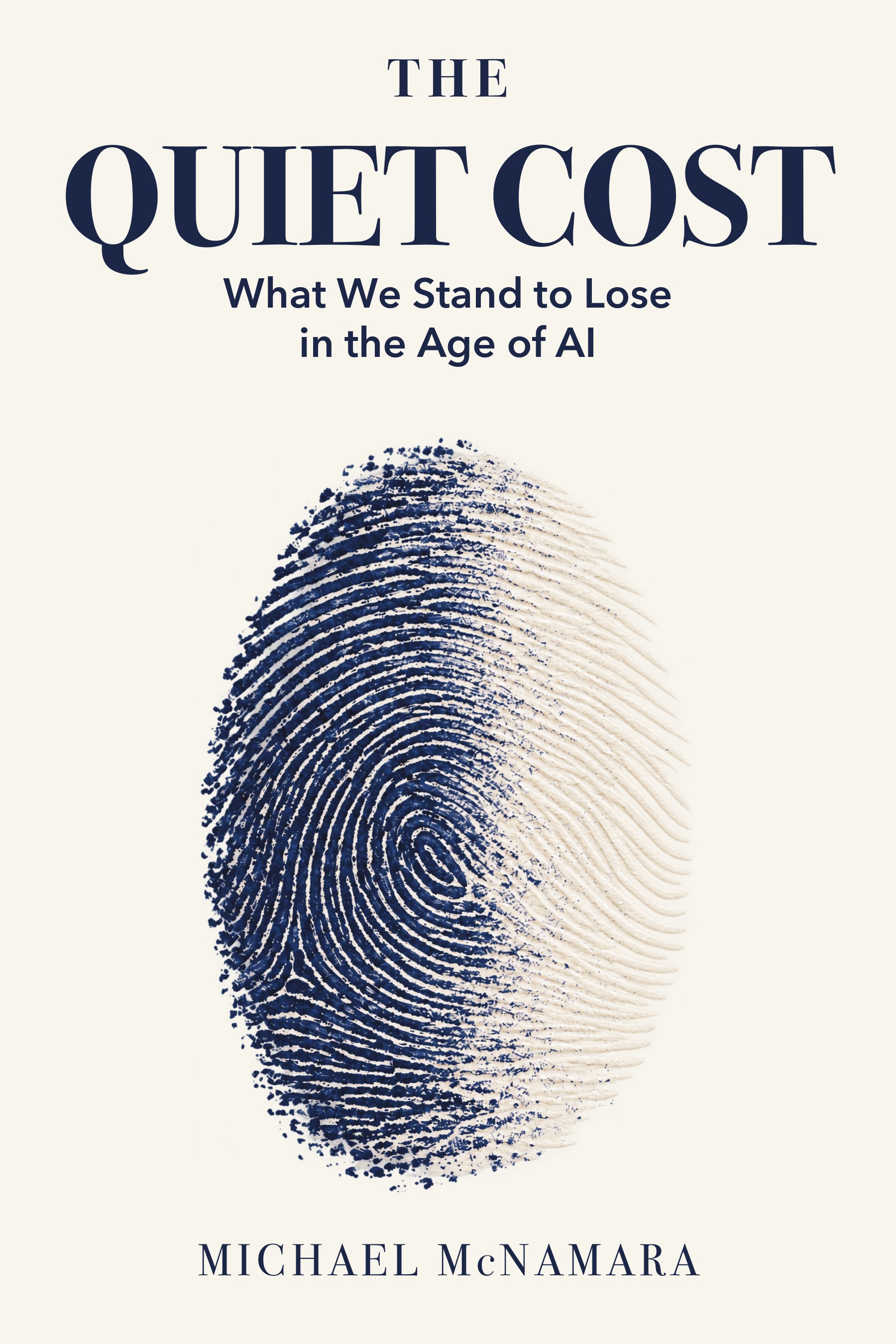
The Quiet Cost
What We Stand to Lose in the Age of AI
The question that I keep coming back to in the book was what happens if AI is as useful as we all hope it will be. Many of us find it easy to imagine a future in which AI takes our jobs, while others have imagined much worse, including human extinction. But history says we tend to imagine extreme scenarios like this at the beginning of a technology. Imagine a future in which neither of those things happen, but instead the costs are a lot more subtle at first, while we are receiving the benefits. The Quiet Cost examines the skills and relationships we might lose while we are all focused on the extreme dangers that are unlikely to come.
Paperback and ebook coming in 2026
The argument
What happens when we stop needing each other?
The concerns we hear about
The dangers already getting our attention
Think about how difficult it would have been to tell a farmer not to use something that would help produce more food on the same land. Or to tell someone who lived far from their family that they should pass up the chance to speak with them on a telephone. There is always good reason to accept the benefits that come from each new technology, but oftentimes as we do, the quiet costs accumulate underneath the surface unnoticed. Or, we do notice, but those losses seem so subtle, while the benefits appear so vast, that we push off the consequences until later. And by the time we go to address them, that technology is so embedded into our everyday life, that it is already too late.
The quiet cost
What changes while the help becomes a habit
If a friend calls us because they are having trouble with one of their kids, we might have some experience that helps. But even if we don't, we get to hear what is going on in their life, and they get to see that we care enough to put aside what we were doing and listen. Now imagine that they have that conversation with AI instead. They might get good advice, and we might still meet them for dinner that weekend, so neither of us sees much reason to think anything has changed. But we never hear about the problem with their child. We don't get the chance to help, or to tell them about something similar we went through. On paper, yes, we are seeing each other as often but the things that made us close in the first place are occurring less and less.
This is one example of the quiet costs that the research says we are already starting to lose. The others include how we learn, how we remember what we learn, and how we make our decisions. I look at both the history of what we did at similar inflection points, and research from both those points in time and the present, specifically with AI use, to showcase this concern. And since there is no point in just raising a flag without putting forth some solutions, the final chapter showcases what we can actually do daily to offset these possible costs in a world with AI.
Coming 2026
I’ll email you when The Quiet Cost is available, with occasional updates before launch.